Technology is advancing at a rapid pace, and maintaining legacy systems is becoming more expensive and more risky every day. Limited performance, security gaps, and compatibility issues with current solutions are part of daily life. That is why more and more companies are looking for a modernization path with no interruptions: a legacy systems migration that does not require stopping the business or taking unnecessary risks. This article explains, in practical terms, how to modernize your legacy systems while minimizing disruptions and maximizing the benefits.
Do you already need a legacy systems migration? The signs that confirm it
Before jumping into modernization, it is worth confirming that the time is right. These are the clearest signs that you can no longer wait:
- Scalability limitations: if your systems cannot grow or adapt to your business updates, it is time to consider modernization.
- Performance decline: when current systems run more slowly and hinder productivity, your business starts to lose competitiveness.
- Security gaps: legacy systems often lack the latest security measures, making them an easy target for cyberattacks.
Before migrating: define objectives and plan the operation
Before committing to any modernization project, it is essential to be clear about the goals: what do you expect to achieve with the migration? Better performance, security, scalability, or all three at once? Setting clear and realistic goals helps focus efforts, define the service you need, and measure the real result of the migration.
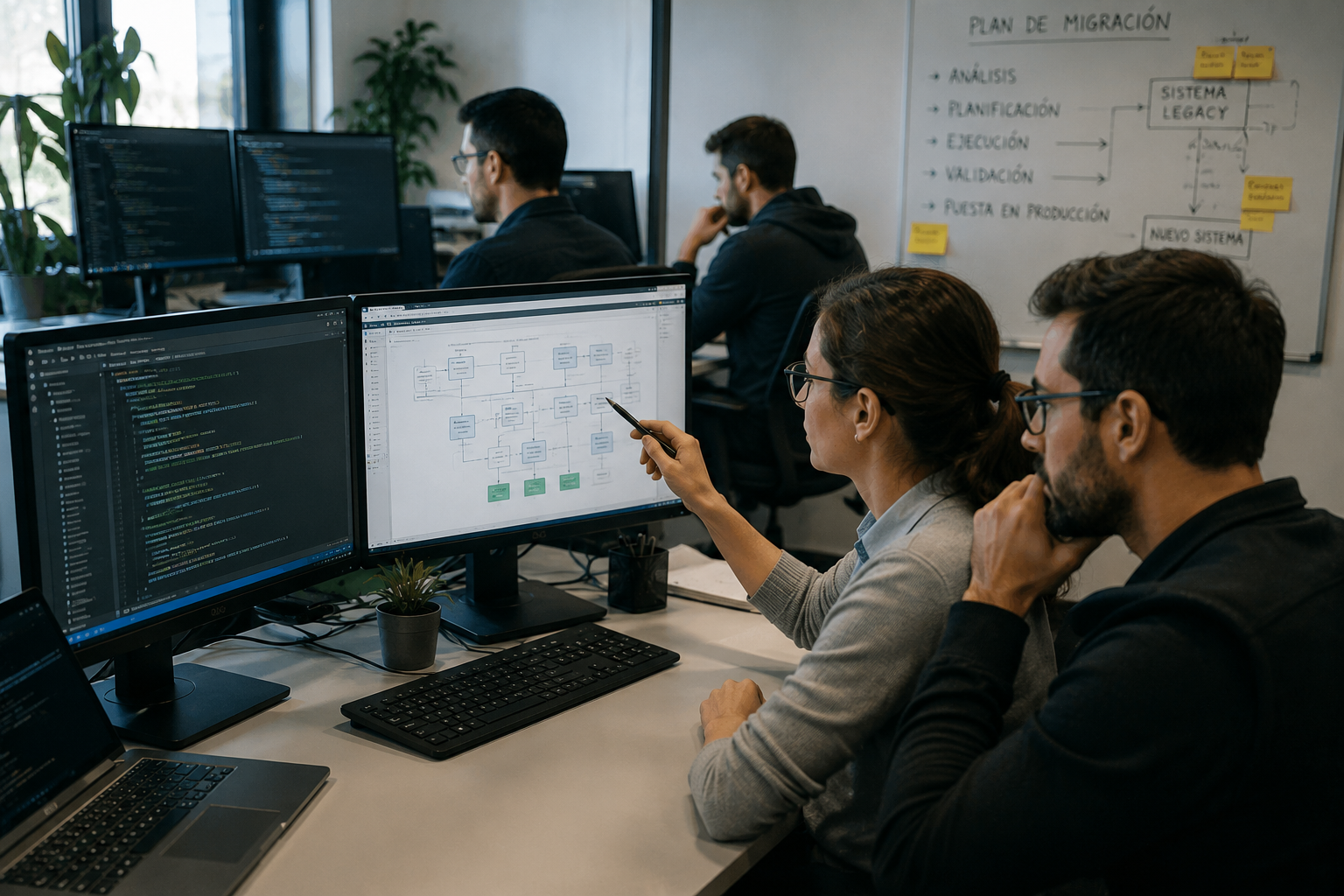
Before migrating, fully understand which systems, applications, and assets will be affected. Make a detailed inventory that identifies all interconnected parts and their dependencies. This helps avoid unexpected problems during the migration and prevents unwanted interruptions.
Types of legacy system migration: which one fits your case
- Full rewrite: completely rewrite the old system in a new technology. It is a solid option, but it can be costly and time-consuming.
- Refactoring: restructure parts of the system without changing its core functionality. It is usually faster and cheaper than a full rewrite.
- Phased migration: gradually move individual modules or functions to new platforms. It reduces risk by letting teams adapt to the new technology progressively.
- System integration: connect the legacy system with modern solutions through interfaces. It enables gradual modernization without interrupting critical business operations.
- Cloud migration: the cloud offers flexibility, scalability, and advanced security options. It can reduce maintenance costs and make remote access easier.
The right migration type depends on the budget, the available time, and the complexity of the system.
Strategy for a no-interruption migration: 5 key steps
Migrating a legacy system to a more modern one is a complex process that must be carried out by expert teams. Nothing is done at random: it requires a prior strategy with specific steps and tasks.
- Contingency planning: even with careful planning, unexpected issues can arise. A contingency plan with alternative solutions minimizes interruptions and keeps business continuity intact.
- Gather and review all available documentation: how the system works, what changes it has undergone over the years, and which improvements were discarded because the technology was not available.
- Training and team preparation: modernization depends not only on technology, but also on the team. Train people so they can adapt to the change: a well-informed team reduces obstacles during and after migration.
- Thorough pre-production testing: before moving to production, test the modernized system in a controlled environment. Detecting and solving problems before they reach end users prevents many interruptions.
- Gradual implementation of the new system: instead of a massive migration, move individual parts and monitor their performance before completing the rest. System integration, connecting legacy and modern components through interfaces, is one of the most effective ways to do this without stopping the business.
- Measurement and optimization: after completing the migration, measure the new system’s performance against the established goals and adjust what is needed to optimize efficiency and user satisfaction.
Frequently asked questions about uninterrupted legacy system modernization
How do I know if I need to modernize my legacy systems?
When you notice scalability limitations, declining performance, or security gaps that did not exist before. Any of those three signs is a good indicator that modernization can no longer wait.
What are the most common types of legacy system migration?
Five: full rewrite, refactoring, phased migration, system integration through interfaces, and cloud migration. The right choice depends on the budget, the available time, and the system’s complexity.
How can a legacy system be migrated without stopping the business?
The key is gradual implementation: migrate individual modules and monitor their performance before moving on, instead of doing a massive migration all at once. System integration, connecting legacy and modern components through interfaces, is one of the most effective ways to achieve this.
What role does team training play in a migration?
A decisive one. Modernization does not depend only on technology: a team that does not understand the change becomes less motivated and makes more mistakes. Training people before migrating reduces obstacles during and after the process.
Why is it important to test before migrating to production?
Because it allows problems to be detected and resolved in a controlled environment before they affect end users. Getting ahead of failures is the most direct way to avoid unwanted interruptions.
How long does uninterrupted modernization take?
It depends on the type of migration chosen and the system’s complexity. A phased migration or one based on system integration usually takes longer to complete, but in return it avoids stopping the business during the process.